Clem's Sashimi
I also discovered much later that the much seen practice in Japanese sushi restaurants in Malaysia (and probably elsewhere too), of mixing soy sauce and wasabi to make a dipping condiment is not how the Japanese do it. The customary way is to place a piece of wasabi onto a piece of sashimi or sushi and then dip the product (at the end away from the wasabi) into soy sauce i.e. the soy and the wasabi are kept apart. Also, in the case of sushi the rice part is not dipped in soy sauce (too much of it is taken up between the rice grains). And as many of you will know, wasabi served in restaurants (unless high-end) is not actually real wasabi (although it may contain a small portion of the latter). This restaurant "wasabi" tastes different and is overpoweringly spicy from the addition of horseradish to the blend.
Real wasabi has a different flavour profile and is milder in spice level. In restaurants, if the wasabi served is not spicy at all, it is probably because it is old - wasabi real or otherwise loses its spiciness over time after exposure to air. If making your own wasabi (such as from powder), do it just before serving.
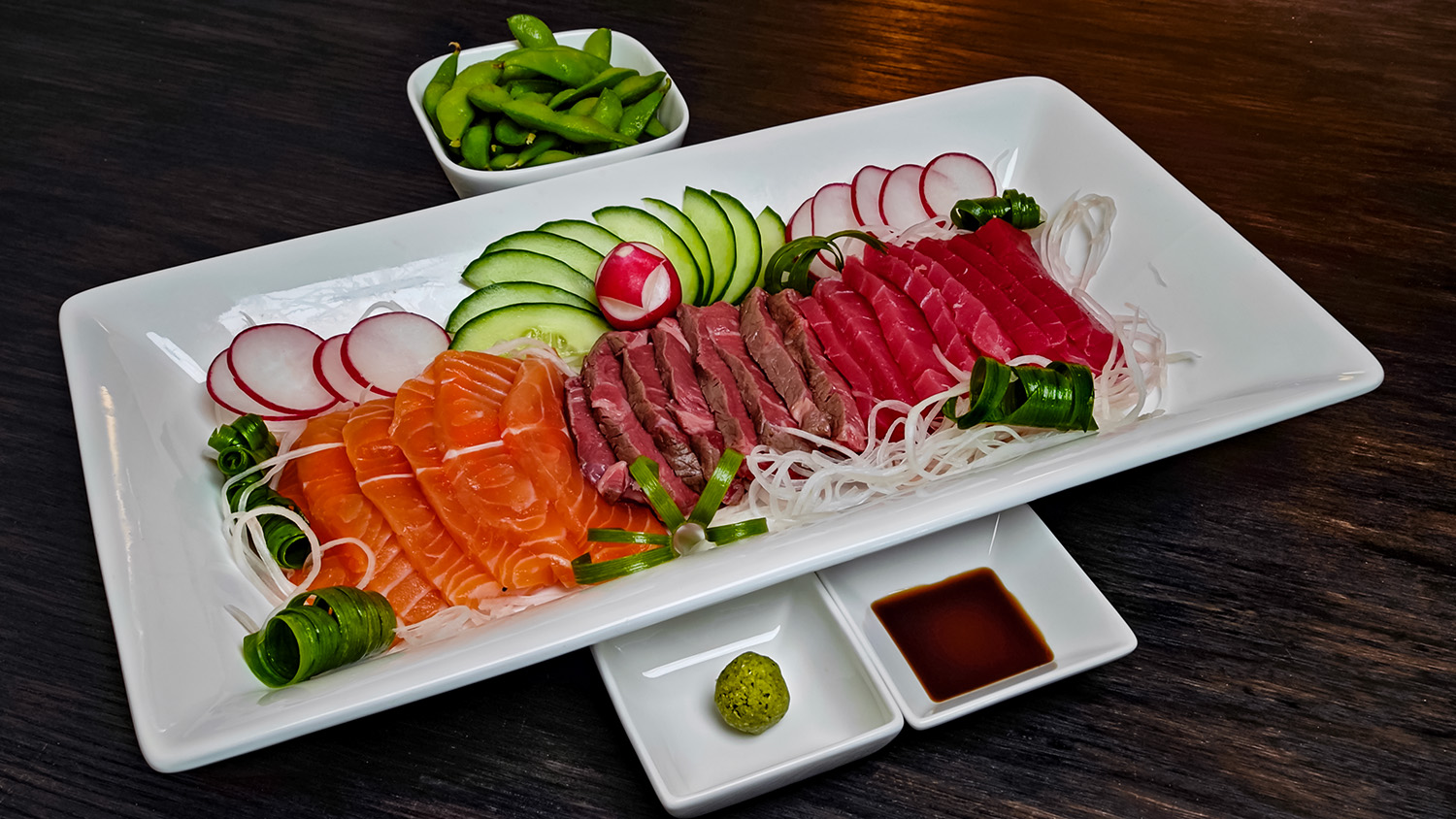
Salmon (sake
サーモン刺身), beef
(gyūniku),
and tuna
maguro)
The
wasabi
was reconstituted from freeze-dried Tasmanian real wasabi
underground stems (rhizomes).
The soy sauce was a Japanese-made sushi/sashimi type
(milder and sweeter with sugar, alcohol and liquorice added).
Being the complete amateur gastronaut, I found that I prefer artificial wasabi from a tube (or powder) rather than the real thing. The Tasmanian real wasabi (albeit from a free-dried powder) had a earthy, mild spice flavour - not enough kick for me).
All my cooking (some without recipes) can be found here (click on each photo to go to that dish's page):
http://clemkuek.com/photoalbum/photo696.html
Video presentations can be found here:
16
February
2026
Chinese New Year's eve
Created by Clem Kuek
